
June 28, 2026 · 8 min read
Better Chews for Puppies: What I Recommend and What I Avoid
By Andrew · Trail & Heel
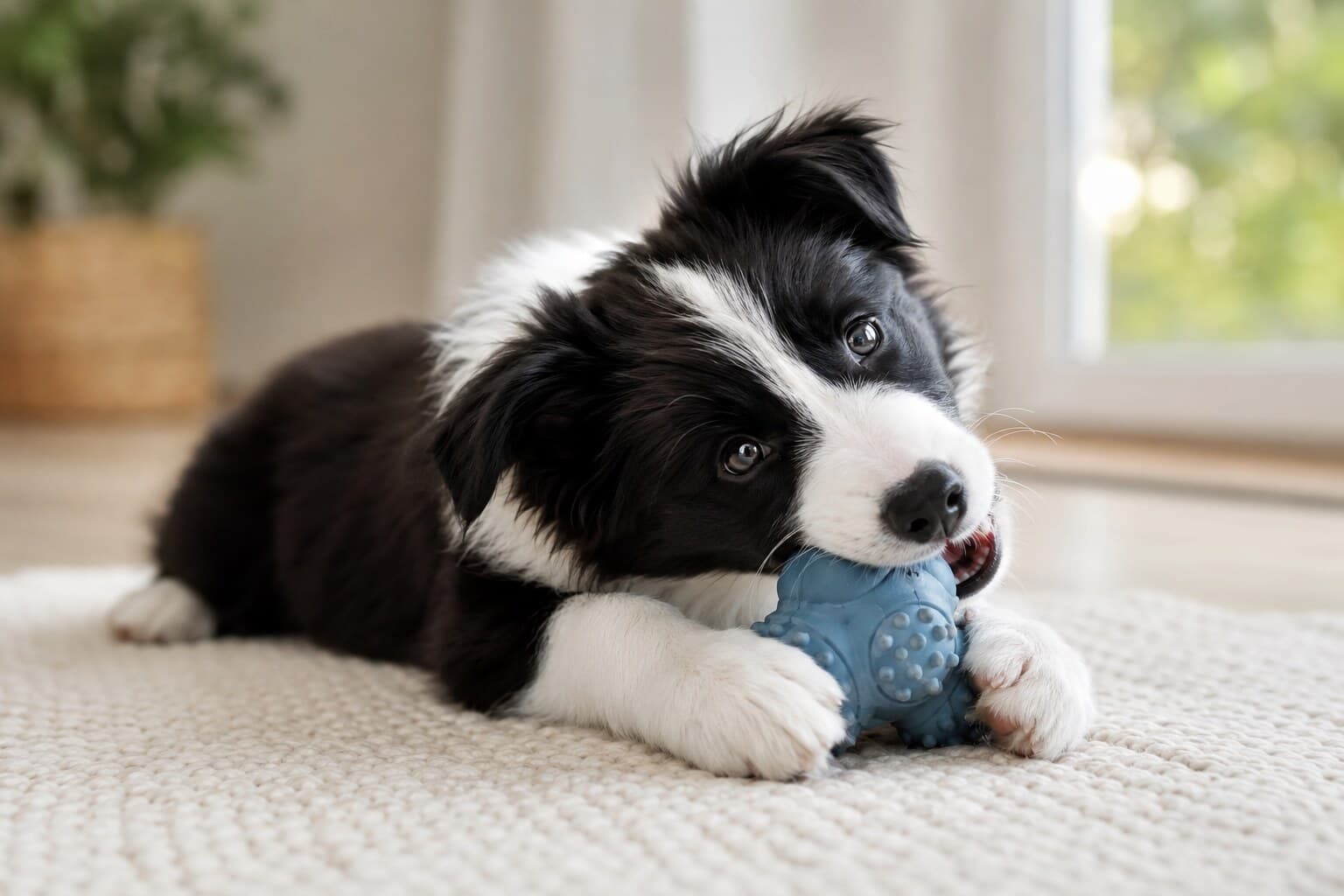
Puppies need to chew. It is part of how they explore the world, handle teething discomfort, burn off energy, and calm themselves when they are overstimulated.
And when we do not give them good things to chew, they usually find their own.
That might mean hands, shoes, furniture, leashes, kids' toys, or the corner of a rug.
A lot of puppy owners end up buying piles of toys that fall into one of two frustrating categories: toys the puppy destroys in two minutes, or toys the puppy cannot make any progress with at all.
Neither is very helpful.
If a toy shreds too quickly, it can become unsafe and expensive. But if a chew is so hard, boring, or difficult that the puppy cannot really work on it, many puppies lose interest and go looking for something more satisfying.
Puppies like to feel that their effort is working. They enjoy licking food out of a toy, chewing something that slowly softens, working kibble loose, or settling into a longer activity.
A good chew should not disappear instantly, but it also should not feel impossible. The sweet spot is something safe, interesting, and satisfying enough that your puppy actually wants to keep working on it.
Basic chew safety
Every puppy is different, so there is no perfect chew for every dog.
- Supervise new chews.
- Choose the right size for your puppy.
- Take chews away once they become small enough to swallow.
- Avoid anything that splinters, cracks, or breaks into sharp pieces.
- Be careful with very hard chews, especially during teething.
- Introduce edible chews slowly if your puppy has a sensitive stomach.
- Keep fresh water nearby, especially when using edible chews like bully sticks or collagen chews.
A helpful rule of thumb is this: if a chew is hard enough to damage your puppy's teeth, it is probably not a great puppy chew.
Veterinary dental sources often warn against very hard items like bones, antlers, and hooves because they can increase the risk of tooth fractures.
Chews and enrichment I usually recommend
Every puppy has different preferences, but these are the options I see puppies enjoy most often.
The product links below are examples, not the only acceptable options. Size, supervision, and your puppy's chewing style matter more than the brand name.
Stuffed Kongs
A stuffed Kong is one of my favorite starter options. It can be useful for crate time, settling down, teething puppies, food puzzles, and giving your puppy a job during busy parts of the day.
You can fill a Kong with soaked kibble, wet puppy food, plain pumpkin, soft treats mixed with food, or a small amount of dog-safe peanut butter. Freezing it can make it last longer.
Important note: if you use peanut butter, make sure it does not contain xylitol, which may also be listed as birch sugar.
Toppl-style food toys
Toppl-style toys are great for puppies who get frustrated with Kongs. Because the opening is wider, many puppies can make progress more easily. That makes them a nice beginner food toy.
They are especially helpful for meal enrichment, crate or pen time, puppies who need an easier win, and dogs who give up on harder food toys.
Lick mats
A lick mat is not technically a chew, but it can still be very useful enrichment.
Licking helps some puppies settle. Lick mats can be especially helpful during grooming, crate time, or family meals when your puppy needs something appropriate to do.
You can use wet puppy food, plain pumpkin, soaked kibble, or plain yogurt if your puppy tolerates it. Freezing the mat can make it last longer.
Safety note: if your puppy tries to chew up the mat, only use it with close supervision or skip it.
Bully sticks
Bully sticks can be very satisfying for some puppies. Many dogs enjoy them because they are edible, flavorful, and allow the puppy to make real progress.
They can be helpful for supervised quiet time, puppies who need a more satisfying chew, stronger chewers, and dogs who ignore plain rubber or nylon toys.
Safety matters here. Always supervise your puppy with a bully stick. Choose a larger size than you think you need. Take it away before it becomes a small end piece. A bully stick holder can also help reduce choking risk. Keep fresh water nearby, and introduce bully sticks slowly if your puppy has a sensitive stomach.
Collagen chews
Collagen chews can be another good option for dogs who enjoy edible chews. They are often satisfying, and many puppies find them more interesting than hard plastic or nylon chews.
They may work well for supervised chewing sessions, puppies who like bully sticks, and dogs who need a longer-lasting edible chew.
Choose the right size, supervise closely, remove small end pieces, and keep fresh water nearby. Stop using them if they upset your puppy's stomach.
Puppy dental chews
Some puppy dental chews can be useful for short chew sessions. They are usually not as long-lasting as a stuffed toy or bully stick, but they can still give your puppy something appropriate to chew.
Look for age-appropriate labeling, weight-appropriate sizing, and softer puppy-safe options. Use them in moderation. Too many edible chews can cause stomach upset.
Frozen food toys and slow feeders
Frozen food toys are great for puppies who need a longer-lasting activity. You can freeze a stuffed Kong, a Toppl, a lick mat, a slow feeder, or a shallow enrichment bowl.
These are especially useful for teething puppies, crate time, post-play settling, and puppies who need help calming down.
Chews I usually avoid for puppies
Some popular chews are not my favorite options for puppies.
I usually avoid cooked bones, antlers, hooves, hard marrow bones, very hard yak chews, rawhide, small chew pieces, rope toys as unsupervised chew toys, and tennis balls as chew toys.
Some of these are common, but common does not always mean ideal. Some are too hard. Some can break into risky pieces. Some are easy to swallow. Some are simply not engaging enough for the puppy.
Rope toys can be fine for supervised tug and play, but I do not like them as unsupervised chew toys because some dogs shred and swallow the strings.
Tennis balls are for fetch, not chewing.
Age matters
Young puppies usually need softer, easier options.
Good starter choices include puppy Kongs, Toppl-style food toys, lick mats, gentle puppy-safe chews, and frozen food enrichment.
Teething puppies may chew harder and more often. This is a good time to use frozen stuffed toys and softer chewing options. I would be extra careful with very hard chews during this stage.
Older puppies may be ready for more durable chews, but harder is not always better.
The safest chew is one that keeps your puppy engaged without creating a tooth, choking, or stomach risk.
The main idea
The goal is not to buy the hardest chew possible.
The goal is to give your puppy something safe, interesting, and satisfying enough that they actually want to use it.
A good chew helps your puppy settle, use their mouth appropriately, work through frustration, stay busy during normal family life, and choose the chew instead of your hands, clothes, furniture, or leash.
Puppies love to make progress.
Give them something safe to work on, and you will usually get better results than you would from a pile of boring toys they ignore.